.png)


Stretching for Energy: Why Movement Can Wake You Up Better Than Another Coffee
We usually think of stretching as something slow, relaxing, and quiet. It is what we do before bed, after a workout, or when we want to calm the body down.
But stretching can also do the opposite.
In a recent STRETCHIT live session, Alicia talked about how stretching can be used for energy, especially if you spend a lot of time sitting. This is not about forcing yourself through a long workout in the middle of a busy day. It is about using movement in a smart, practical way to wake your body up, improve circulation, and shift out of that heavy, sluggish feeling that often hits after hours at a desk.
As our trainer put it during the session, "You don't have to do the most to get the right dose."
That is the whole idea. A few minutes of movement can be enough to bridge the gap between feeling stuck and feeling more awake.
Why Sitting Makes You Feel So Tired
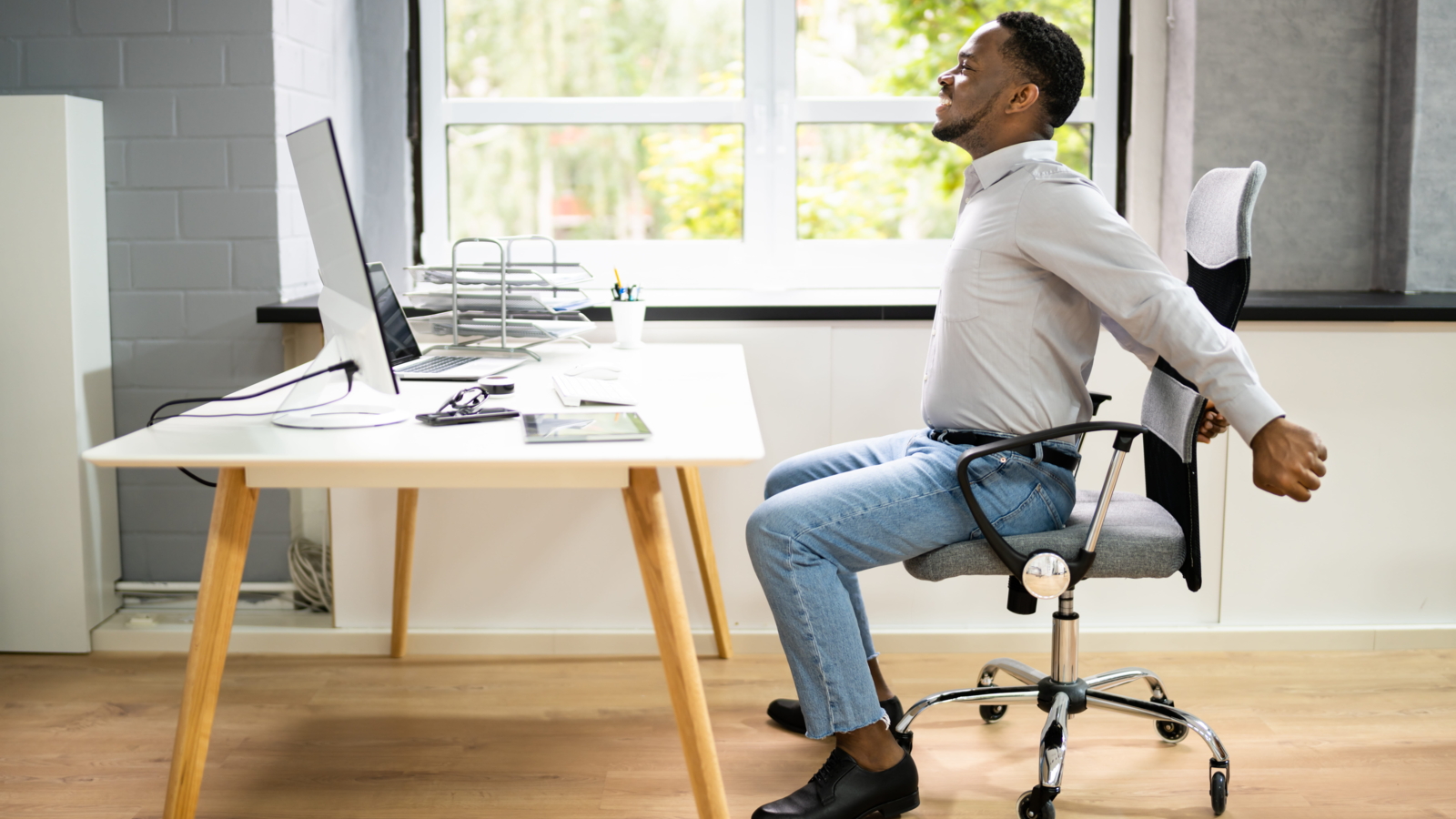
If you sit for most of the day, you probably know the feeling: your body starts to feel stiff, your posture slowly collapses, your back feels uncomfortable, and your energy drops. It can happen even if you slept well or started the morning feeling good.
This is because sitting still is not truly restful for the body. When you stay in one position for too long, your muscles are not getting much variety. Your hips stay flexed, your spine does not move through its full range, your shoulders may round forward, and your breathing can become more shallow.
Research on prolonged sitting supports this connection. Studies on office workers and people who sit for long periods show that extended sedentary time is linked with musculoskeletal discomfort, especially in the lower back. Active breaks that include stretching and mobility exercises have been shown to reduce perceived discomfort during prolonged sitting [2].
Alicia explained this in a simple way during the live session. When you slump forward, your rib cage and lungs do not have as much space to expand. When you sit taller, you often feel like you can breathe more deeply. But even "perfect posture" is not the full answer.
The body does not just want one ideal position. It wants movement.
This is especially important for the spine. Your spine is designed to flex, extend, rotate, and side bend. If most of your day happens in one fixed seated shape, it makes sense that your back and neck can start to feel stiff or tired.
This does not mean movement is a cure-all for back pain. Back pain is complex and can have many causes, including injury, stress, lack of strength, repetitive positions, or long periods of inactivity. This article is not medical advice. If you have pain, numbness, sharp discomfort, or symptoms that do not improve, it is best to talk to a healthcare provider.
But for everyday stiffness from sitting, gentle movement can be a powerful place to start.
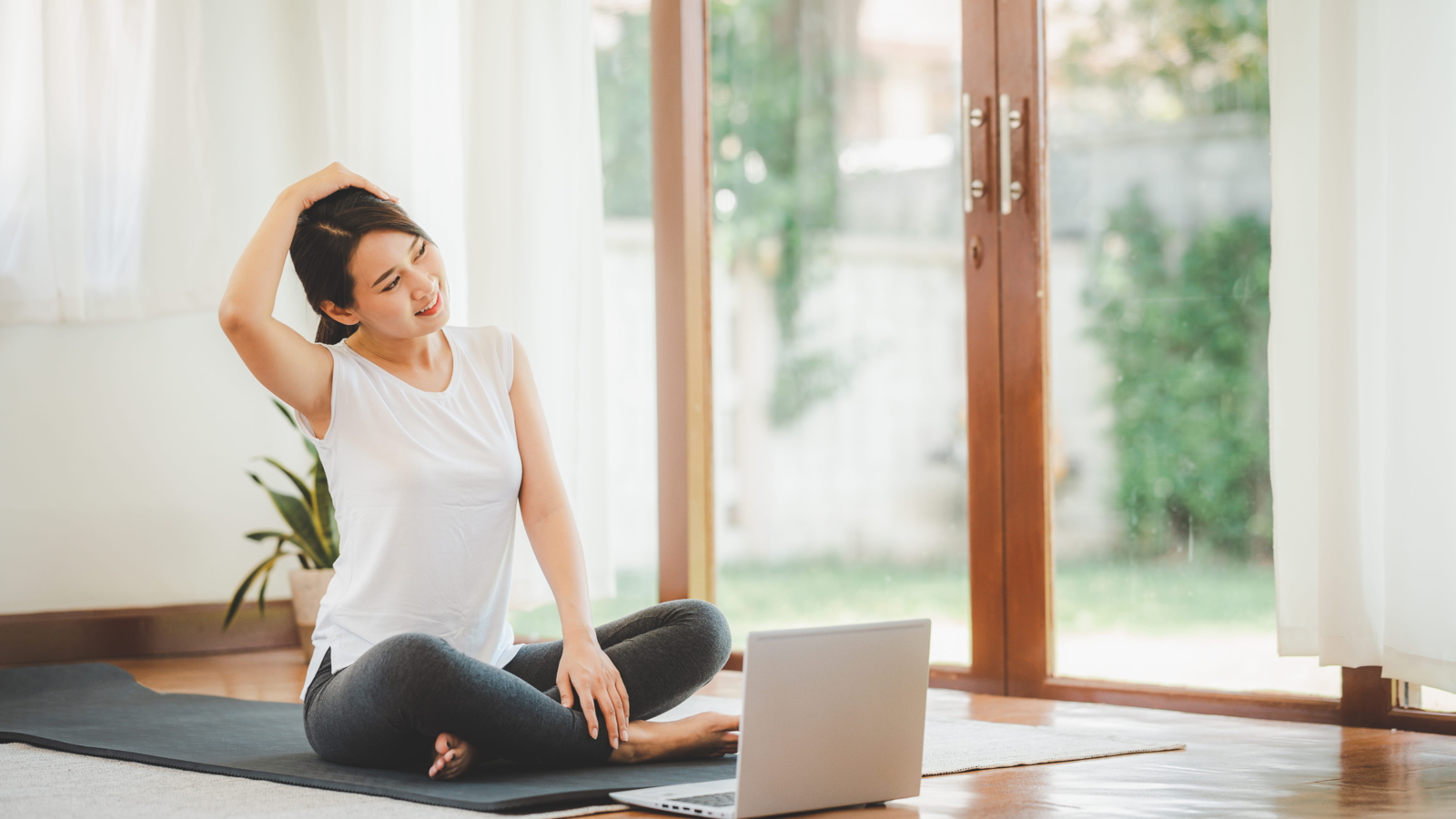
The 2 P.M. Energy Dip Is Real
In the live session, Alicia joked that 2 p.m. is her "twilight hour" - the time of day when fatigue starts to creep in. Many people can relate to this. You may feel okay in the morning, but by the afternoon, your focus drops, your posture gets worse, and the idea of moving feels harder.
The usual solution is coffee, a snack, or something sweet. And yes, those can give you a short lift. But they may also come with jitters, cravings, or another crash later.
Movement works differently.
Instead of pushing energy into your body from the outside, movement helps your body create a more awake state from the inside. When you get up and move, your heart rate rises slightly, blood flow improves, your body temperature increases, and your breathing pattern changes. These are small physiological shifts, but they can make a big difference in how alert you feel.
A systematic review and meta-analysis on micro-breaks found that short breaks of 10 minutes or less can help reduce fatigue and increase vigor, or the feeling of energy and alertness [1]. This supports Alicia's main message: you do not always need a full workout to feel better. Sometimes, the most useful thing you can do is step away from the chair and move for a few minutes.
Dynamic Stretching vs. Passive Stretching
Not all stretching creates the same effect.
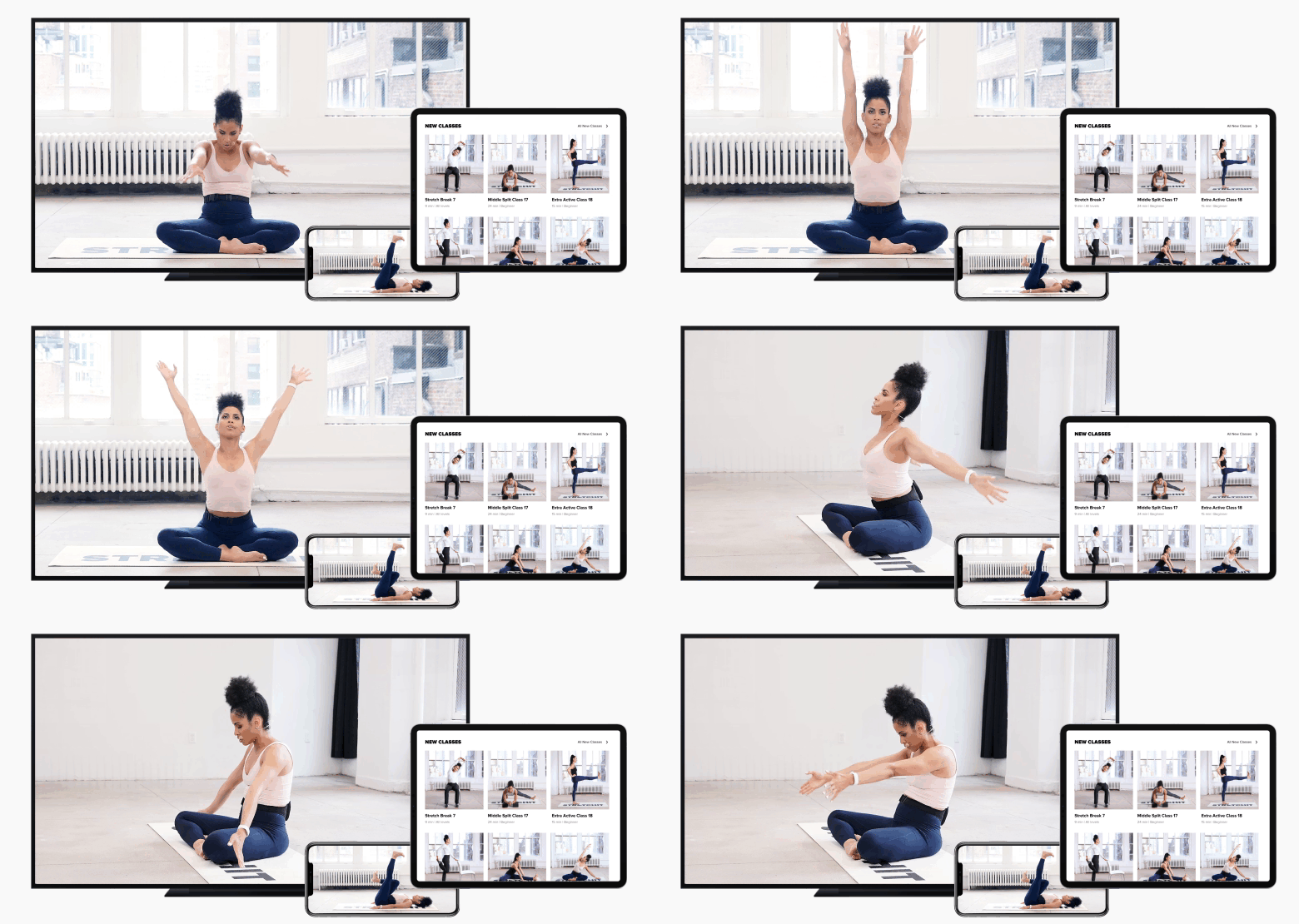
A long, passive stretch with slow breathing can be wonderful when your goal is to relax. Think of a butterfly stretch held for a while, a deep forward fold, or a quiet evening flexibility session. These shapes can help shift the body toward a calmer state.
But if you are in the middle of your workday and still need to think, focus, and finish tasks, you may not want to move your body into deep relaxation mode.
That is where dynamic stretching comes in.
Dynamic stretching means moving in and out of a stretch instead of holding it for a long time. You still create length and mobility, but the rhythm is more active. You reach, twist, circle, lift, hinge, and pulse. The body wakes up because the stretch becomes part of a movement pattern.
Research on warm-ups and stretching shows that active warm-up movements can increase muscle temperature and blood flow, which may support better physical readiness and performance [4]. While a workday stretch break is not the same as an athletic warm-up, the same basic idea applies: movement can help the body feel more awake and prepared.
This is why Alicia recommended movements like side reaches, shoulder circles, knee lifts, hip circles, gentle hinges, and reaching up and down. These movements stretch different areas of the body, but they also help you feel more energized because they involve rhythm, breath, and circulation.
The goal is not to exhaust yourself. The goal is to change your state.
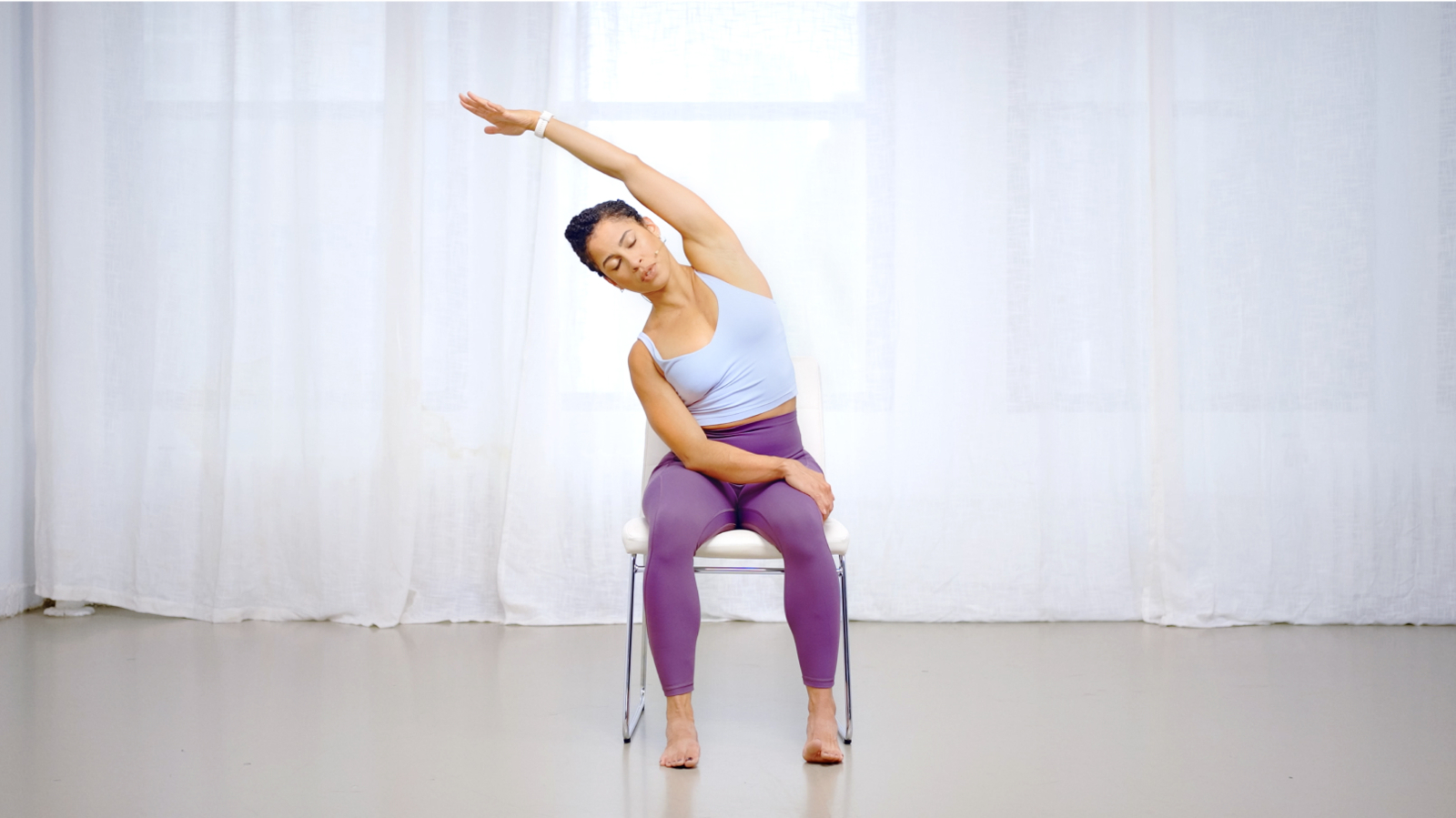
Your Breath Changes the Outcome
One of the most interesting points from the live session was the connection between breath and energy.
When you hold a deep stretch and breathe slowly, your body often starts to downshift. This can be helpful before bed or during a recovery-focused class. Slow breathing has documented effects on the cardiovascular, autonomic, respiratory, endocrine, and brain systems, which may help explain why it often feels calming [3].
But when you move dynamically, your breath naturally changes. It may become a little shorter, quicker, and more active. Not frantic, not forced, just more awake.
For example, if you reach your arms overhead and then fold or move side to side, your breathing will probably match that movement. You may inhale as you reach up and exhale as you move through center. This creates a different feeling than lying down in a passive stretch and taking long, slow breaths.
That difference matters.
If your goal is to calm down, choose slower movements and longer breathing. If your goal is to wake up, choose movements that encourage a more active rhythm.
Small Movement Ideas to Try During the Day
You do not need special equipment or a full class to start. You can use a few simple movements to break up long periods of sitting.
Try side reaches. Stand up, reach one arm overhead, and gently lean to the side. Switch sides and keep moving slowly from right to left. This wakes up the shoulders, ribs, and spine.
Try shoulder circles. Roll your shoulders forward and back. When the shoulders move back, you may feel a light stretch across the chest. When they move forward, you may feel the upper back and shoulder blades open.
Try alternating knee lifts. Lift one knee, lower it, then lift the other. You do not need to lift very high. This adds movement through the hips and can help bring energy into the lower body after sitting.
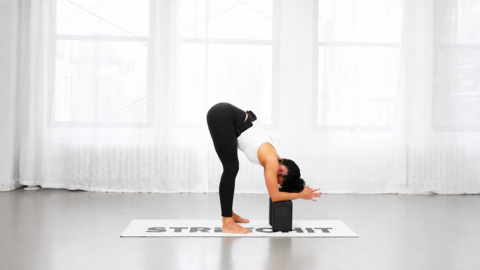
Try gentle hip hinges. Stand with soft knees, send your hips back, then return to standing. You may feel a light stretch through the hamstrings and glutes. Keep it controlled and comfortable.
Try wrist circles. If you type a lot, your wrists and hands can feel stiff. Make gentle circles with your wrists, then switch directions.
Try neck half-circles. Slowly look from one side to the other, moving with care. You can also gently look up and down. Do not rush neck movements, and avoid pushing into discomfort.
Try a reach-and-squat pattern. If it feels comfortable, reach up, then bend your knees slightly as you reach toward the floor. Stand and reach up again. This brings more of the body into the movement and can feel especially energizing.
These movements are simple, but that is the point. They are easy to repeat. They do not require a big mental commitment. They help you build a habit of moving before stiffness and fatigue take over.
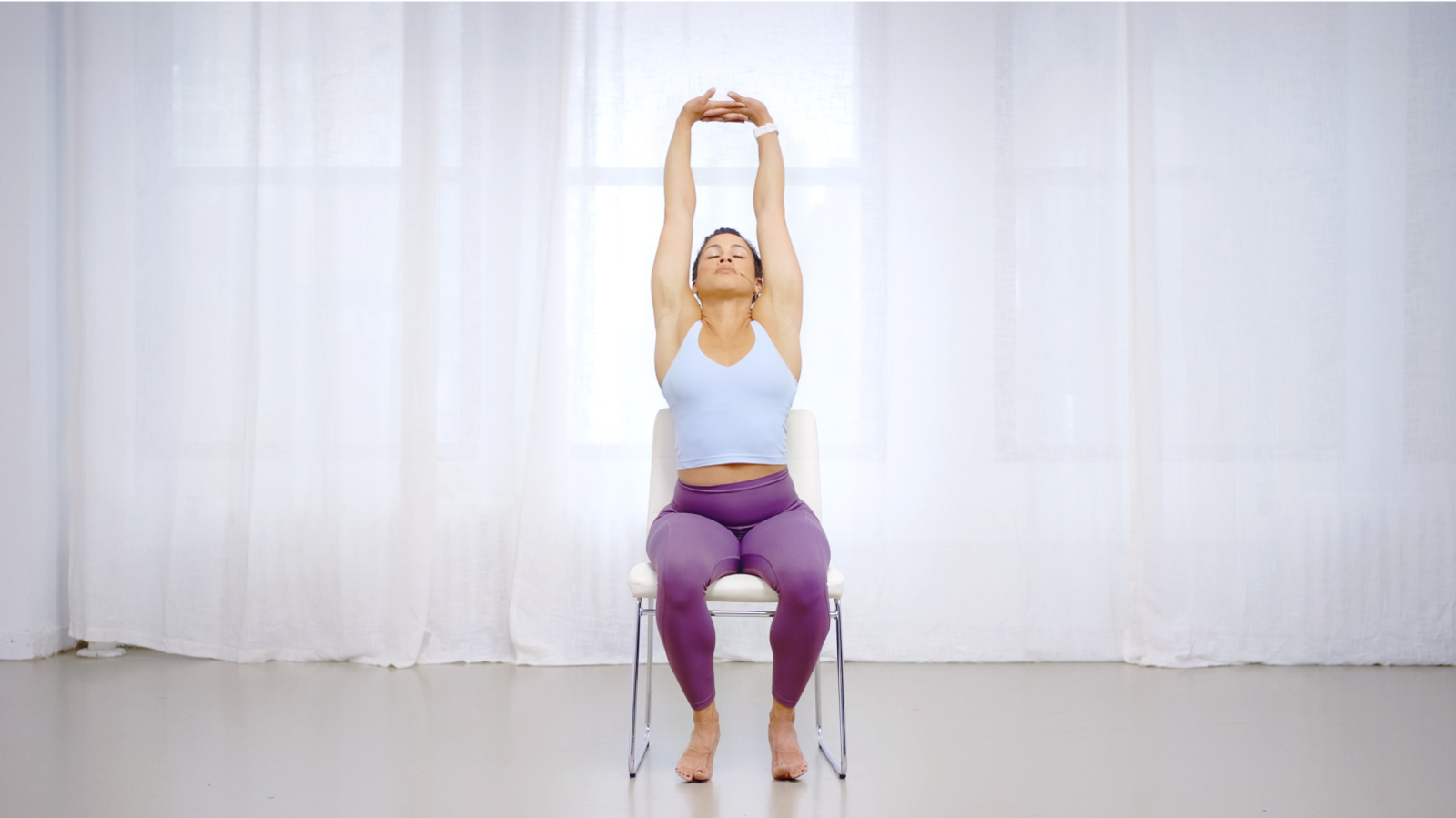
You Do Not Need to Wait for the Perfect Time
One of the biggest barriers to consistency is the belief that movement only counts if it is long, structured, and intense.
You plan to take a class. Work gets busy. The class does not happen. Then you stay seated for several more hours and tell yourself you will try again tomorrow.
But small movement still counts.
A few minutes between meetings count. Standing up and doing shoulder circles counts. Reaching side to side while your coffee brews counts. Moving your spine through a few gentle twists counts.
This is not about replacing your regular stretching practice. It is about supporting it.
Longer classes help you build flexibility, strength, and body awareness over time. Short movement breaks help you feel better during the day and make your body less likely to feel stuck by the time you finally get to your mat.
The two work together.
Movement Is Not a Magic Fix, But It Is a Practical Tool
Alicia made an important point when she talked about back pain and stiffness: there is no one-size-fits-all solution. The body is too complex for that. For one person, discomfort may come from long hours of sitting. For another, it may come from stress, a previous injury, sport, strength imbalances, or not moving through enough different ranges of motion.
That is why it is better to think of movement as one part of a bigger picture.
You are not trying to "fix" everything in two minutes. You are giving your body a new signal. You are reminding your joints, muscles, and nervous system that they have more options than sitting still.
As Alicia said during the live, "Movement helps."
Sometimes, that is the most useful place to begin.
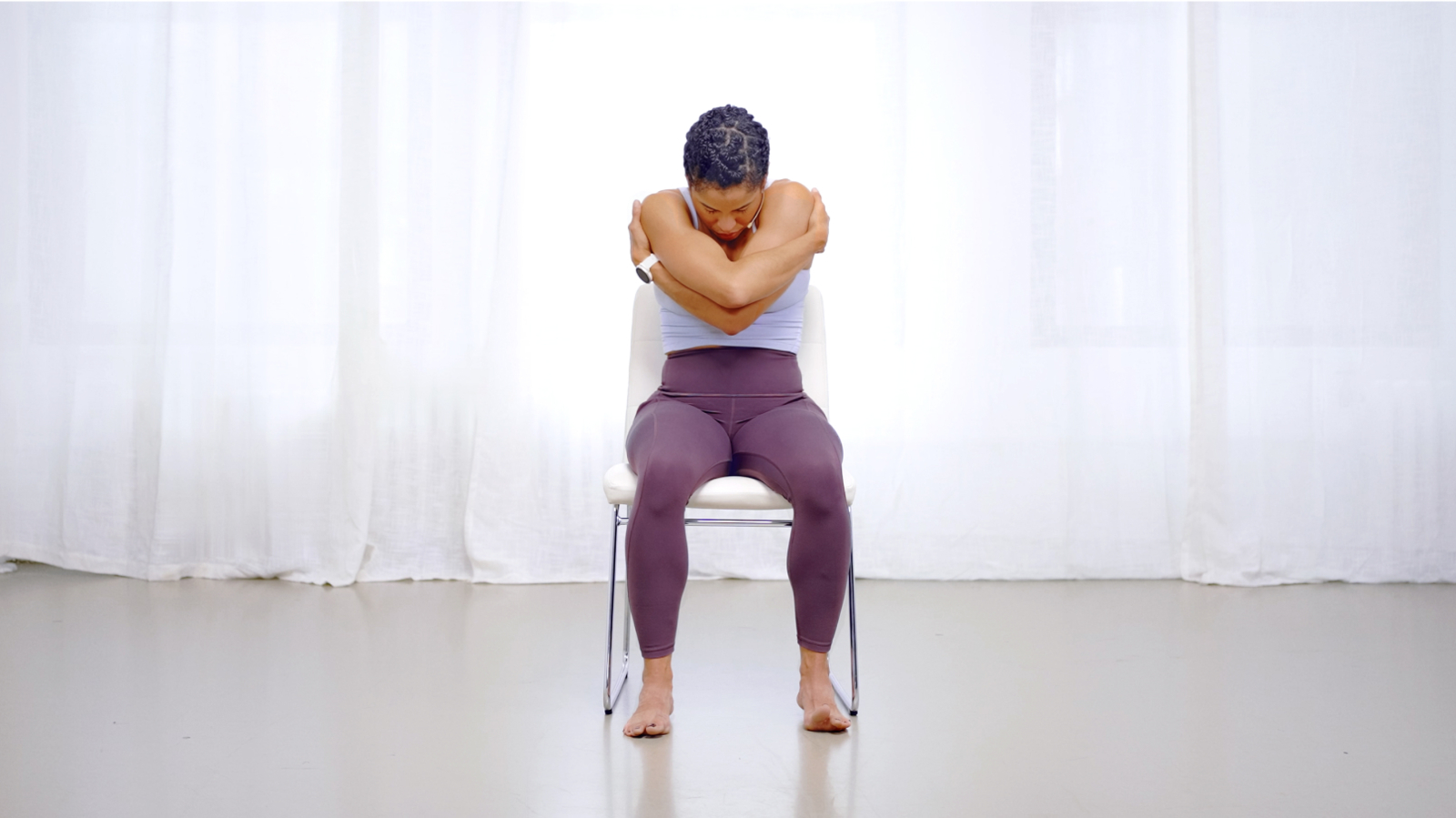
Get Started With STRETCHIT
The next time you feel the afternoon slump coming on, try not to think of stretching only as something you do later. Try using it as an energy reset right now.
Stand up. Reach overhead. Circle your shoulders. Move your spine. Take a few active breaths. Let your body shift out of stillness before you reach for another coffee.
And when you are ready for more guidance, STRETCHIT can help you build a consistent practice with expert-led classes, structured programs, and routines for different goals - from full-body flexibility to posture, mobility, and recovery. Classes vary in length, starting from just 5 minutes, so you can choose what fits your day instead of waiting for the perfect time.
If you are short on time, try our new 5-Minute Express program. It brings together all 5-minute classes, making it easier to add movement between meetings, during an afternoon energy dip, or anytime your body needs a quick reset.
You can also watch the full live session with Alicia on our Instagram for more examples and explanations. We host free live sessions every Saturday, so it is a great way to learn directly from our trainers and bring small, useful movement habits into your week.
Sources used in the article:
[1] "Give me a break!" A systematic review and meta-analysis on the efficacy of micro-breaks for increasing well-being and performance
https://pmc.ncbi.nlm.nih.gov/articles/PMC9432722/
[2] The effects of active breaks on musculoskeletal discomfort during prolonged sitting
https://link.springer.com/article/10.1186/s12891-024-08186-3
[3] How breath-control can change your life: A systematic review on psycho-physiological correlates of slow breathing
https://pmc.ncbi.nlm.nih.gov/articles/PMC5709795/
[4] Warm-up and stretching in the prevention of muscular injury
https://pmc.ncbi.nlm.nih.gov/articles/PMC5833972/