.png)


Why Your Flexibility Progress Plateaus And What Advanced Stretchers Can Do Differently
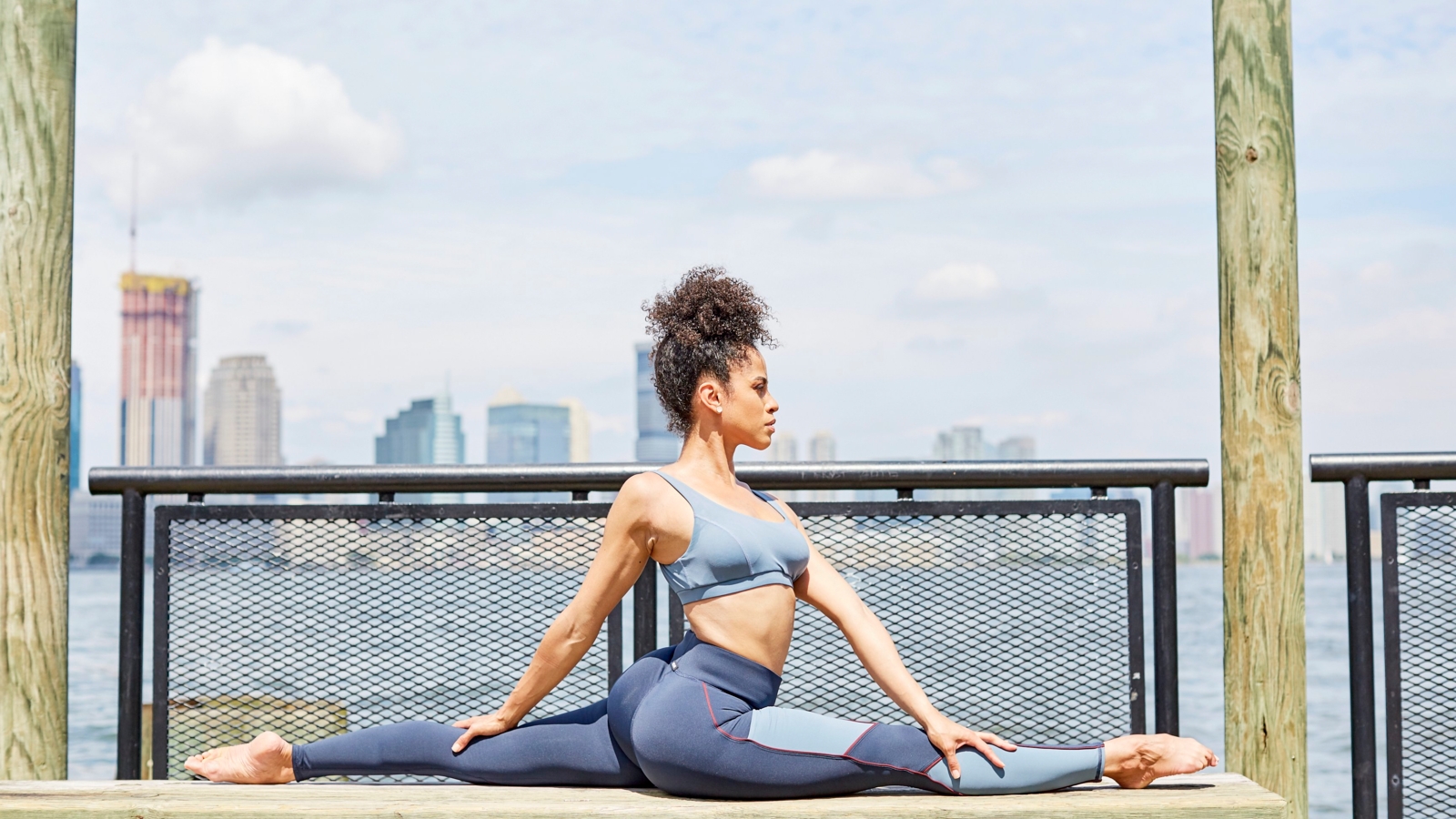
At the beginning, flexibility progress can feel almost addictive.
You stretch for a few weeks and suddenly your forward fold is lower. Your hips feel less locked. Your backbend looks more open. Your split is not perfect yet, but it’s clearly moving in the right direction.
Then, at some point, the exciting part gets quieter.
You are still showing up. You are still stretching. But your body seems to have stopped negotiating. Your split stays a few inches from the floor. Your backbend still gets stuck in the same place. Your shoulders open only after a long warm-up, then close again by the next day.
This is the advanced flexibility plateau.
And no, it does not always mean you are doing something wrong. More often, it means your body has adapted to the routine that used to work — and now it needs something more specific.
A Plateau Is Not Always About “Tight Muscles”
When progress slows down, the first thought is usually: “I need to stretch more.”
More hamstring stretches. More lunges. More time in your backbend. More pushing into the deepest version of the shape.
But advanced flexibility is not just about making muscles longer. Research on stretching suggests that improvements in range of motion can involve several factors, including stretch tolerance, passive stiffness, and how the body responds to deeper positions (Behm et al., 2025). In simple terms, your body is not only asking, “Can this muscle lengthen?” It is also asking, “Do I feel safe and controlled here?”
That is why your flexibility can feel different from day to day. Your muscles did not suddenly become shorter overnight. Your body may simply be tired, sore, stressed, under-recovered, or less willing to give you access to the same range.
For beginners, consistent stretching often creates visible change. For advanced stretchers, the missing piece is usually not just more stretching. It may be strength, control, recovery, better technique, or a different type of stimulus.
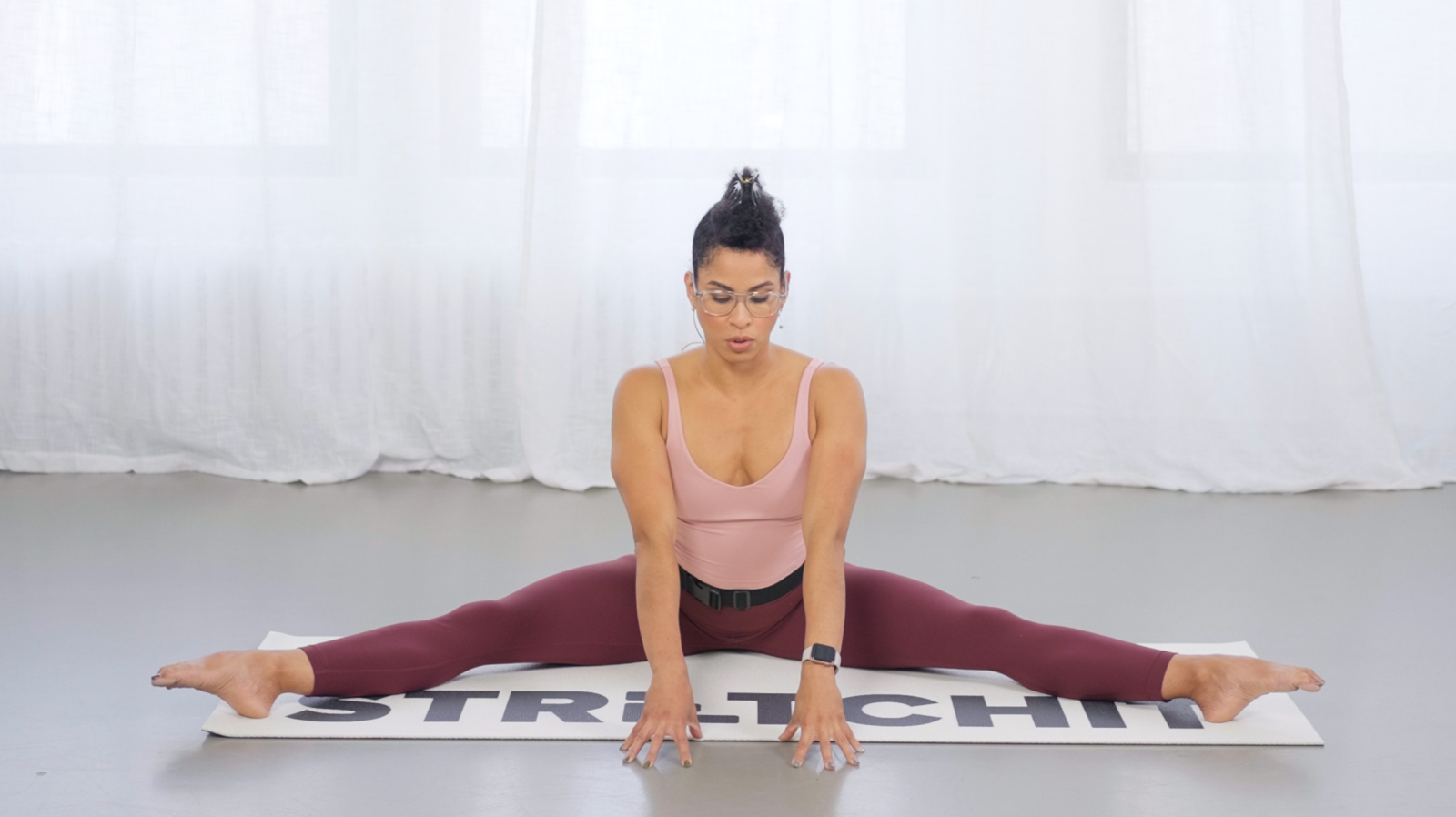
Your Body Stops Responding to the Same Routine
There is nothing wrong with having a favorite routine.
Maybe you always start with hip flexors, move into hamstrings, then test your splits. Maybe your backbend routine always includes cobra, bridge, camel, and a few shoulder openers. Maybe your shoulder mobility work has looked the same for months.
At first, this routine may have worked beautifully. But the body is very good at adapting. Once a routine becomes familiar, it may stop creating enough of a challenge to produce new progress.
Your body may need variety, but not random variety. You need purposeful variation.
For splits, that might mean adding active leg lifts, hip flexor strengthening, or isometric work near your end range. For backbends, it might mean working on upper-back mobility, shoulder flexion, glute support, and core control instead of only pushing deeper into the lower back. For shoulder mobility, it might mean combining passive opening with active overhead strength.
“I stretch every day” is not always enough information. How you stretch matters too. A large meta-analysis on static stretching found that flexibility outcomes are influenced by variables like dose, duration, and frequency — not just the fact that stretching happened (Thomas et al., 2024).
Advanced Flexibility Requires Control, Not Just Depth
The deeper you go, the more control matters.
A beginner may feel successful simply getting closer to a shape. An advanced stretcher needs to ask a different question: can I actually own this range?
Can you enter your split with control, or do you drop into it and hope for the best? Can you hold a backbend without feeling all the pressure in your lower back? Can you lift your arms overhead without flaring your ribs or arching your spine to fake the range?
This is the difference between passive flexibility and active flexibility.
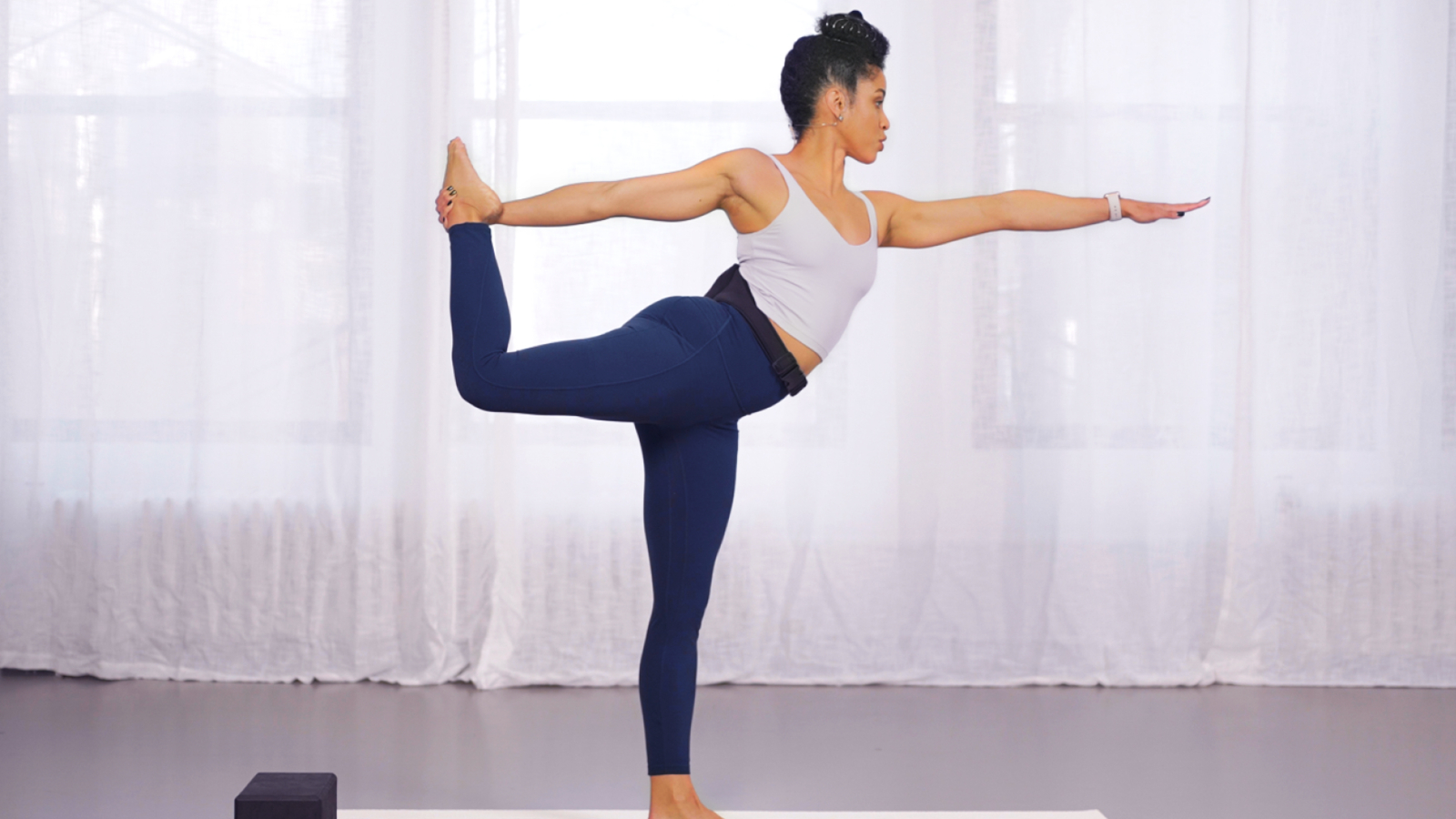
Passive flexibility is the range you can access with gravity, props, or external support. Active flexibility is the range you can use with muscular control. Both matter, but advanced progress often depends on closing the gap between them.
This is why strength work can feel like the missing puzzle piece. A 2021 systematic review and meta-analysis found that strength training can improve range of motion, with results comparable to stretching in some cases (Afonso et al., 2021). That does not mean you should stop stretching. It means strength and flexibility are not enemies. They are partners.
A flexible body is not just a relaxed body. It is a body that trusts itself in a larger range.
Backbends Are a Good Example
Backbend plateaus are especially frustrating because they often feel mysterious.
You stretch your back. You do cobra. You do bridge. You keep trying to push higher or bend more. But the shape still feels blocked.
The problem is that a backbend is not only a spine stretch.
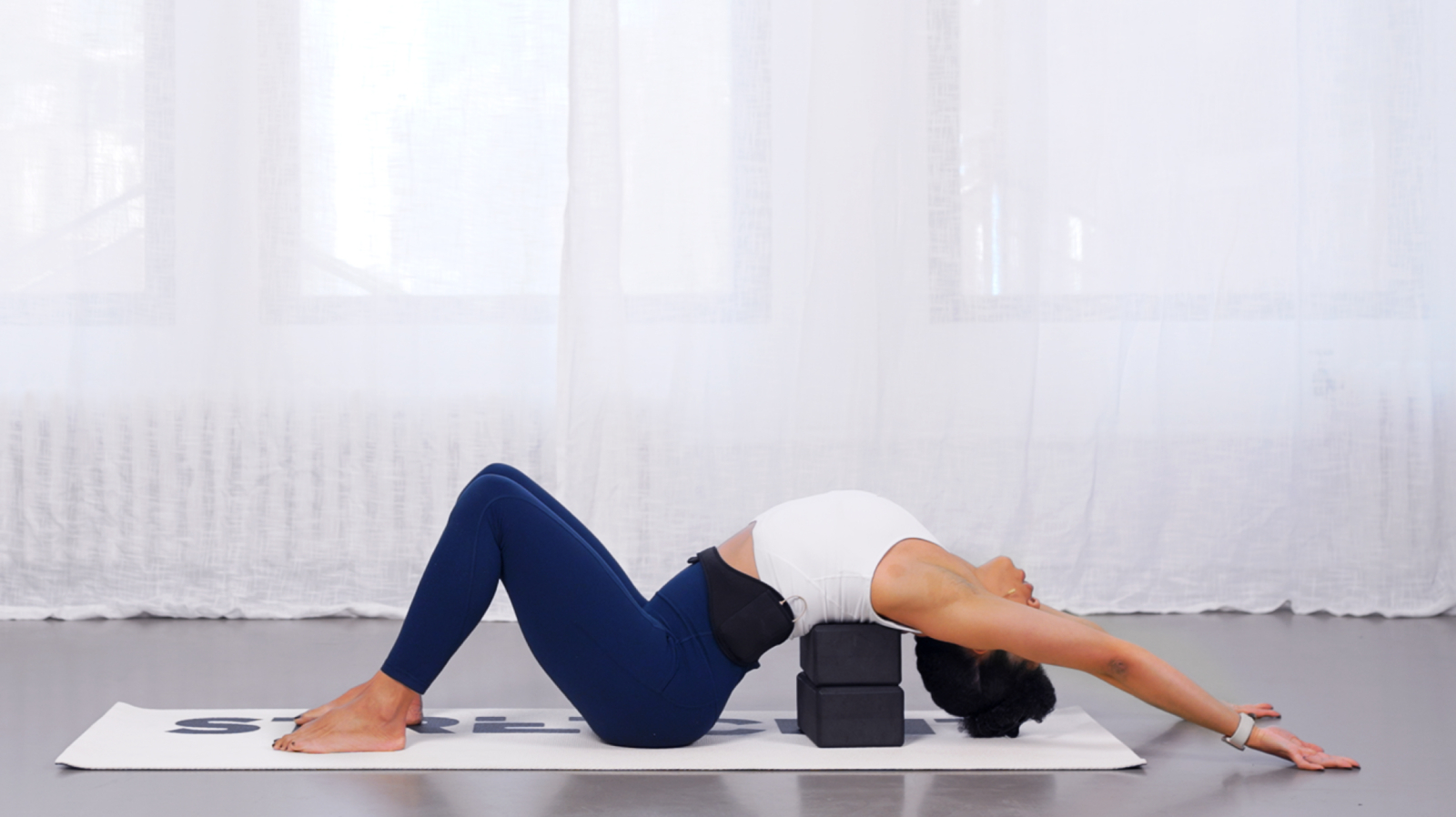
It asks for hip flexor length, shoulder mobility, upper-back movement, glute support, core control, and even breath. If one area is not contributing, another area usually compensates. Many people try to get more backbend by forcing the lower back to do everything, while the upper back, shoulders, and hips stay relatively restricted.
So if your backbend progress has stopped, the answer may not be “do more backbends.” It may be: open the shoulders, strengthen the glutes, mobilize the upper back, learn to breathe in extension, and stop dumping everything into the lumbar spine.
Sometimes progress comes from making the movement smarter, not bigger.
Intensity Is Not the Same as Progress
Advanced stretchers are often good at discomfort.
That can be helpful. Flexibility training is not always easy or gentle. But being able to tolerate intense sensations does not mean every session should be a fight.
If you constantly chase your deepest stretch, your body may start to guard instead of open. You might feel flexible during the session, then tighter the next day. You might need longer and longer warm-ups to access the same range. You might feel like you are working hard, but not adapting.
That is often a sign that the dose is off.
A productive stretch should feel clear and strong, but it should not feel like your body is panicking. You should be able to breathe. You should be able to stay present. You should be able to come out of the position with control.
Discomfort can be part of stretching. Sharp pain, joint pain, nerve-like sensations, or pain that changes how you move is different. This article is not medical advice, and if something feels wrong, it is always best to check with a healthcare provider.
Key Takeaways
If your flexibility progress has slowed down, it does not automatically mean you have reached your limit. It usually means your body needs a smarter training approach.
Remember:
- A plateau is not always about “tight muscles” — fatigue, stress, recovery, and control all affect your range.
- Repeating the same routine for months can stop creating progress, even if the routine is good.
- Advanced flexibility requires strength and control, not just deeper passive stretching.
- Backbends are not only about the spine — shoulders, hips, glutes, core, and breath all matter.
- More intensity is not always better. A productive stretch should feel strong, but not panicked or painful.
- Sharp pain, joint pain, nerve-like sensations, or pain that changes how you move is a sign to stop and check with a healthcare provider.
- Progress often comes from training smarter: adding variety, active flexibility, recovery, and better technique.
Get Started With STRETCHIT
If your flexibility progress has slowed down, you do not have to keep guessing your way through it.
STRETCHIT gives you guided classes and programs for splits, backbends, mobility, active flexibility, recovery, and full-body stretching — so you can train with structure instead of repeating the same routine and hoping for the best.
Start where your body is today, train the range you already have, and let your next breakthrough come from better practice — not more forcing.
Resources
Behm, D. G., Kay, A. D., Trajano, G. S., & Blazevich, A. J. (2025). Mechanisms underlying range of motion improvements following static stretching. Sports Medicine. https://link.springer.com/article/10.1007/s40279-025-02204-7
Thomas, E., Bianco, A., Paoli, A., & Palma, A. (2024). Optimising the dose of static stretching to improve flexibility: A systematic review and meta-analysis. Sports Medicine. https://link.springer.com/article/10.1007/s40279-024-02143-9
Afonso, J., Ramirez-Campillo, R., Moscão, J., Rocha, T., Zacca, R., & Martins, A. (2021). Strength training versus stretching for improving range of motion: A systematic review and meta-analysis. Healthcare, 9(4), 427. https://pmc.ncbi.nlm.nih.gov/articles/PMC8067745/